
mms
MMS Eliminates Even the Most Resistant Bacteria – Study

Oct
Eradicating antibiotic-resistant bacteria using chlorine dioxide
How chlorine dioxide destroys—even eradicates—the most antibiotic-resistant bacteria. A study.
Chlorine dioxide, MMS – Miracle Mineral Solution, eradicates antibiotic-resistant bacteria. Scientific research study.
ABSTRACT
Bacterial antimicrobial resistance (AMR) is a problem in every region. Six pathogens account for 73.4% of deaths attributable to bacterial AMR: Escherichia coli (E. coli), Staphylococcus aureus (S. aureus), Klebsiella pneumoniae (K. pneumoniae), Streptococcus pneumoniae (S. pneumoniae), Acinetobacter baumannii (A. baumannii) and Pseudomonas aeruginosa (P. aeruginosa).
The World Health Organization launched a Global Action Plan on AMR in 2021, which remains active. Worldwide healthcare costs associated with AMR amount to many billions of dollars.
A review of antimicrobial resistance commissioned by the British government suggested that AMR could kill 10 million people annually by 2050 and has emerged as one of the greatest public-health threats of the 21st century.
Just one AMR pathogen, methicillin-resistant Staphylococcus aureus (MRSA), caused more than 100,000 deaths worldwide, while the other pathogens covered in this research are also responsible for large numbers of deaths.
This research focused on investigating the effectiveness of chlorine dioxide in eliminating five different antibiotic-resistant bacteria in vitro, as a proposed new treatment.
The study used varying concentrations of chlorine dioxide, ranging from 1 to 7 ppm, against five antibiotic-resistant bacteria. Disinfection experiments were compared with controls, and the results showed disinfection exceeding 95% at a concentration of 7 ppm.
Chlorine dioxide is described as a size-selective antimicrobial agent capable of rapidly killing micrometer-sized organisms, while supposedly not causing significant harm to much larger organisms such as animals or humans because it cannot penetrate deeply into living tissues.
The article describes short-term exposure to low concentrations as safe. It calls for clinical trials to establish optimal doses and protocols for eliminating antibiotic-resistant microorganisms from the body.
Download the study here:
Introduction
The five antibiotic-resistant bacteria included in this research were Escherichia coli (E. coli), methicillin-resistant Staphylococcus aureus (staphylococcal infection), Klebsiella pneumoniae (Klebsiella pneumonia), Acinetobacter baumannii (Acinetobacter) and Pseudomonas aeruginosa.
In 2017, the World Bank Group warned that, by 2050, drug-resistant infections could cause global economic damage comparable to the 2008 financial crisis.
AMR also threatens progress toward several United Nations Sustainable Development Goals, particularly the goals relating to good health and well-being.
Hospital costs were estimated at more than €900 million in 2007; outpatient costs were €10 million and lost productivity from work was €150 million.
Furthermore, productivity losses due to deaths caused by infections were estimated at approximately €450 million each year. These economic costs are likely to be significantly higher based on figures in the report Global Burden of Bacterial Antimicrobial Resistance in 2019.
Given the worldwide prevalence of AMR bacteria and the declining effectiveness of antibiotics, the search for more natural and innovative means of combating these pathogens is considered essential.
WHAT IS CHLORINE DIOXIDE? LIVE VIDEO FOR CRITICS.
https://rumble.com/embed/v2cn3t6/?pub=4
The article presents chlorine dioxide as a safe and effective method of eliminating AMR bacteria without creating further resistance. Discovering new natural antibacterial agents with novel mechanisms of action remains a high global priority.
Treatment of antibiotic-resistant bacteria. More than 150 antibiotics have been developed since penicillin was discovered in 1940, and resistance has emerged to most antibiotics currently available.
On this basis, by 2050 the death toll could be staggering—one person every three seconds.
Bacteria have developed resistance to almost every antibiotic introduced in the past 50 years.
There is a positive correlation between antibiotic use and prevalence of resistance, with higher rates in countries where antibiotic consumption is greater.
Inappropriate prescribing occurs when doctors incorrectly prescribe antibiotics for infections such as viral or fungal illnesses rather than bacterial infections.
It has been hypothesized that antibiotic overuse is associated with inappropriate prescribing and administration of antibiotic treatments.
Irresponsible antibiotic use is a fundamental driver of antibiotic resistance. Antibiotics are now becoming less effective because resistance to antimicrobial medicines continues to increase.
Increasing antibiotic resistance results from both exposing microorganisms to antibiotics and spreading resistant microorganisms and their resistance mechanisms.
Not only are antibiotics becoming less effective, but their use can also cause dysbiosis, particularly in the gut or at sites of secondary infection.
The impact on human health can be severe: excessive repeated antibiotic use has been shown to destroy much of the natural intestinal flora.
Pharmaceutical companies are also reluctant to invest in antibiotic development for various reasons, including low market returns, restrictions on antibiotic use, scientific challenges and the existing regulatory environment.
Discovering new antibiotics and developing them into medicines is a long and costly process.
Bringing a new medicine to market costs $800 million to $1 billion. On average, it takes more than ten years to reach clinical use.
Because of the urgent fight against AMR, a different approach is needed to investigate alternatives to antibiotic treatment.
Compared with all underlying causes of death in the Global Burden of Diseases, Injuries, and Risk Factors Study (GBD) 2019, antimicrobial resistance (AMR) would have been the third leading GBD level-three cause of death in 2019 under a hypothetical scenario without infection; only ischemic heart disease and stroke accounted for more deaths that year.
Moreover, many hospital pathogens may survive routine cleaning, persisting for long periods in hospitals, indoor air and on surfaces, and contributing to the spread of infections.
Alternative treatments are a promising research area. There is therefore an urgent need to pursue innovative approaches to AMR. This research examines natural substances against resistant organisms such as MRSA, E. coli, S. aureus, K. pneumoniae, A. baumannii and P. aeruginosa that might not generate additional resistance.
The discovery of new natural antibacterial agents with novel mechanisms of action remains a high global priority.
Natural antimicrobial substances have long been used to treat bacterial infections and have been a principal source of medicines throughout human history.
Natural products, including medicinal plants, remain widely popular; approximately 80% of the world’s population relies on plant-based products and related supplements as part of healthcare.
Natural products such as Rosmarinus officinalis, Mangifera indica L. (Anacardiaceae), antimicrobial peptides, essential plant oils and their combinations have shown activity against a broad range of bacterial pathogens, including the five AMR species in this study.
This research investigates elimination of antibiotic-resistant MRSA, Escherichia coli, Klebsiella pneumoniae, Acinetobacter baumannii and Pseudomonas aeruginosa in vitro using CDSpure ampoules containing 2,990 ppm chlorine dioxide in 5 ml ampoules.
Significance of the five antimicrobial-resistant bacteria. Acinetobacter baumannii comprises Gram-negative, strictly aerobic, non-fermenting, non-motile, catalase-positive and oxidase-negative bacteria.
Although A. baumannii accounts for a comparatively small proportion of all bloodstream infections, multidrug resistance in this species is a global problem.
Worldwide, more than 71% are multidrug resistant.
In the United States, 27% of mechanically ventilated patients were colonized by a multidrug-resistant A. baumannii strain.
A. baumannii uses resistance mechanisms including chromosomal beta-lactamases, efflux pumps and aminoglycoside-modifying enzymes.
After exposure to human serum albumin, A. baumannii regulates transcription of beta-lactamases, potentially suggesting intrinsic antimicrobial-resistance mechanisms in serum.
Given the prevalence of infections and outbreaks caused by multidrug-resistant A. baumannii, few antibiotics are effective against conditions caused by this pathogen.
Numerous reports show that A. baumannii rapidly develops antimicrobial resistance and that multidrug-resistant strains have been isolated.
The World Health Organization (WHO) has also designated A. baumannii a critical-priority pathogen that poses a significant threat to human health and urgently requires new antibiotics.
Escherichia coli. Among strains causing urinary-tract infections and bloodstream infections, resistance to several classes of antimicrobials frequently exceeds 50%.
E. coli is a versatile Gram-negative bacterium that is widespread and capable of spontaneous and natural genetic changes.
It measures 1–3 × 0.4–0.7 μm, with a volume of 0.6–0.7 μm as stated in the source.
Klebsiella pneumoniae (Klebsiella pneumonia)
Klebsiella pneumoniae strains are generally classified as opportunistic, hypervirulent (hyKp) or multidrug resistant (MDR).
Whereas classical K. pneumoniae (cKp) comprises opportunistic strains often associated with hospital-acquired infections, hypervirulent strains are considered community-associated bacteria that can infect people of all ages, including otherwise healthy individuals.
The rapid spread of multidrug-resistant K. pneumoniae strains poses a major global-health threat because they cause numerous hospital infections with high morbidity and mortality.
Klebsiella pneumoniae is described as a Gram-negative, encapsulated, non-motile bacterium.
Methicillin-resistant Staphylococcus aureus (MRSA) is considered one of the most dangerous hospital pathogens, causing many difficult-to-treat healthcare-associated infections (HA-MRSA).
Over the last 20–25 years, MRSA has also been isolated in community settings, giving rise to the designation community-associated MRSA (CA-MRSA).
MRSA can cause infections in several organs, most commonly skin and subcutaneous tissue infections, followed by invasive conditions such as osteomyelitis, meningitis, pneumonia, lung abscess and empyema.
Infective endocarditis caused by MRSA is associated with higher morbidity and mortality than infections caused by other organisms and is linked to intravenous drug use.
Methicillin-resistant Staphylococcus aureus (MRSA) is a Gram-positive coccus described in the source as catalase- and coagulase-positive.
Pseudomonas aeruginosa (Pseudomonas aeruginosa)
The Pseudomonas aeruginosa is among the five leading causes of hospital-acquired bloodstream infections, often resulting in sepsis.
P. aeruginosa is an important opportunistic Gram-negative pathogen responsible for many serious acute and chronic infections, with morbidity and mortality reaching 40%.
What makes P. aeruginosa particularly challenging is its high intrinsic and acquired resistance to many available antibiotics.
It is an opportunistic human pathogen that can cause life-threatening acute and chronic infections, particularly in patients with impaired immunity. It is especially important as a leading cause of morbidity and mortality among people with cystic fibrosis.
Chlorine dioxide (ClO2) as an antimicrobial. Chlorine dioxide (ClO2) is a yellow to reddish-yellow gas that can decompose rapidly in air.
Chlorine dioxide has a molecular weight of 67.452 g/mol and a stated solubility in water at sea level of 3.01 g/L (3,000 ppm) at 25 °C and 34.5 mm Hg.
It is an effective biocide at concentrations as low as 0.1 ppm and across a broad pH range. Even in cold water, it is ten times more soluble than chlorine.
Chlorine dioxide has a lower oxidation potential than ozone and chlorine.
The optimal pH is between 6.0 and 10.0; above pH 8.0, it is generally more effective against microorganisms than chlorine.
When it reacts in water it forms chlorite ions, a highly reactive chemical species capable of killing bacteria and microorganisms in a solution.
Chlorine dioxide rapidly kills bacteria, viruses and Giardia, and is effective against Cryptosporidium.
Chlorine dioxide also improves taste and odor, breaks down sulfides and phenols, controls algae, and neutralizes iron and manganese ions.
It is an effective biocide at concentrations as low as 0.1 ppm and across a wide pH range.
https://rumble.com/embed/v12fdcz/?pub=4
Chlorine dioxide, biofilms and resistance.
The source presents chlorine dioxide as suitable for therapeutic use on the grounds that it can penetrate and eliminate biofilms.
According to Simpson et al. (1993), chlorine dioxide can rapidly remove biofilms because it is highly soluble in water.
Unlike ozone, it does not react with extracellular polysaccharides in the biofilm. In this way, chlorine dioxide can quickly penetrate biofilms and reach and kill the microbes living inside them.
Penetrating biofilms to eliminate microorganisms poses a real challenge to both natural and conventional medicine.
A biofilm is a three-dimensional structure formed by microbial cells adhering to living or nonliving surfaces under various physiological and environmental conditions that have not yet been fully established.
These cells also multiply continuously and produce extracellular polymeric substances (EPS), forming a matrix around the microorganisms.
Biofilms are aggregates of microbial cells surrounded by self-produced exopolysaccharide matrices on biotic or abiotic surfaces.
Compared with free-floating cells, biofilm organisms have substantially greater protection against antibiotics, host immune defenses and adverse environmental conditions.
An estimated 65–80% of human infections are caused by biofilm-forming bacteria.
Biofilms are estimated to be 1,000 times more resistant to antibiotics than free-floating cells.
Interactions between bacterial cells and environmental factors trigger biofilm formation.
Chlorine dioxide is said to penetrate and eliminate biofilms, an advantage over many antibiotics that cannot do so.
Another important advantage claimed for therapeutic chlorine dioxide over antibiotics is that bacteria supposedly cannot develop resistance to it.
The four amino acids cysteine, methionine, tyrosine and tryptophan—especially cysteine and biological thiols—play crucial roles in all living systems, including microorganisms. On this basis, the article argues that microbes cannot develop resistance to chlorine dioxide.
Chlorine dioxide penetrates bacterial cell walls and reacts with essential amino acids in the cell cytoplasm, thereby killing the organism.
A by-product of this reaction is chlorite, which the article says is not known to pose major environmental or human-health risks.
Safety and effectiveness of chlorine dioxide
In 1967, the US Environmental Protection Agency (EPA) first registered liquid chlorine dioxide for use as a disinfectant and sanitizer.
Chlorine dioxide is described as a size-selective antimicrobial agent able to kill micrometer-sized organisms quickly while supposedly sparing much larger organisms, such as humans and animals, because it cannot penetrate deeply into living tissue.
The argument presented is that chlorine dioxide cannot penetrate deeply into larger organisms’ tissues, while their circulation continuously supplies antioxidants that protect them from its oxidative effects.
Other studies are cited as showing that chlorine dioxide, a strong oxidant, can inhibit or destroy microorganisms at concentrations between 1 and 100 ppm, producing potent antiviral action and inactivating at least 99.9% of viruses within 15 seconds in sensitivity tests.
Georgiou (2021) reported effectiveness of chlorine dioxide against MRSA in vitro, with 99.99–100% growth inhibition even at low concentrations.
Ongoing work at the Innerlight Biological Research Foundation has investigated possible clinical applications of chlorine dioxide against spores, bacteria and viruses, among other uses, for more than 25 years.
The source states that chlorine dioxide has been used extensively in clinical applications against Epstein–Barr virus (EBV), cytomegalovirus (CMV), hepatitis A and B viruses, HIV (the AIDS virus) and others.
On October 14, 2020, Bolivia’s parliament passed legislation (Law 1351) permitting the use of chlorine dioxide as a medicine against COVID-19.
The article reports successful chlorine dioxide use in countries including Bolivia, Mexico, Peru, Brazil and Colombia.
In Bolivia, Law No. 1351 of 2020 was approved (Bolivian Official Gazette, 2020), authorizing the preparation, marketing, supply and use of chlorine dioxide solutions for prevention and treatment during the COVID-19 pandemic.
More recently, in 2021, a study by Insignares Carrione designed to determine whether orally administered chlorine dioxide was effective in treating COVID-19 concluded that it was effective against COVID-19.
Chlorine dioxide has three atoms, and the source describes its atomic bond as an “unstable” or “negatively charged” ion.
When that atomic bond separates, the article says a very small subatomic pulse of energy is generated. It states that this pulse occurs when chlorine dioxide passes near pathogens within the body.
It claims to attack only “acidic” and “anaerobic” microorganisms (viruses, bacteria, fungi or parasites) in the body without harming the microbiome.
These bacteria survive only in the absence of oxygen and include many pathogens.
Anaerobic organisms have not developed adequate defenses against attack by oxygen, particularly nascent oxygen, and are therefore said to succumb quickly to its lethal action.
The article claims that healthy cells requiring oxygen to survive, or described as “alkaline,” remain safe.
Toxicology of chlorine dioxide
Figure 1 shows reference levels used by the US Environmental Protection Agency for drinking-water disinfection (blue zone).
Levels described as potentially therapeutically effective in laboratory animals with zero toxicity are shown in green; toxic levels appear in red (above 399 ppm).
The 5 ppm level that eliminated at least 99% of antibiotic-resistant bacteria in the present experiments is shown within the blue/green zone described as nontoxic.
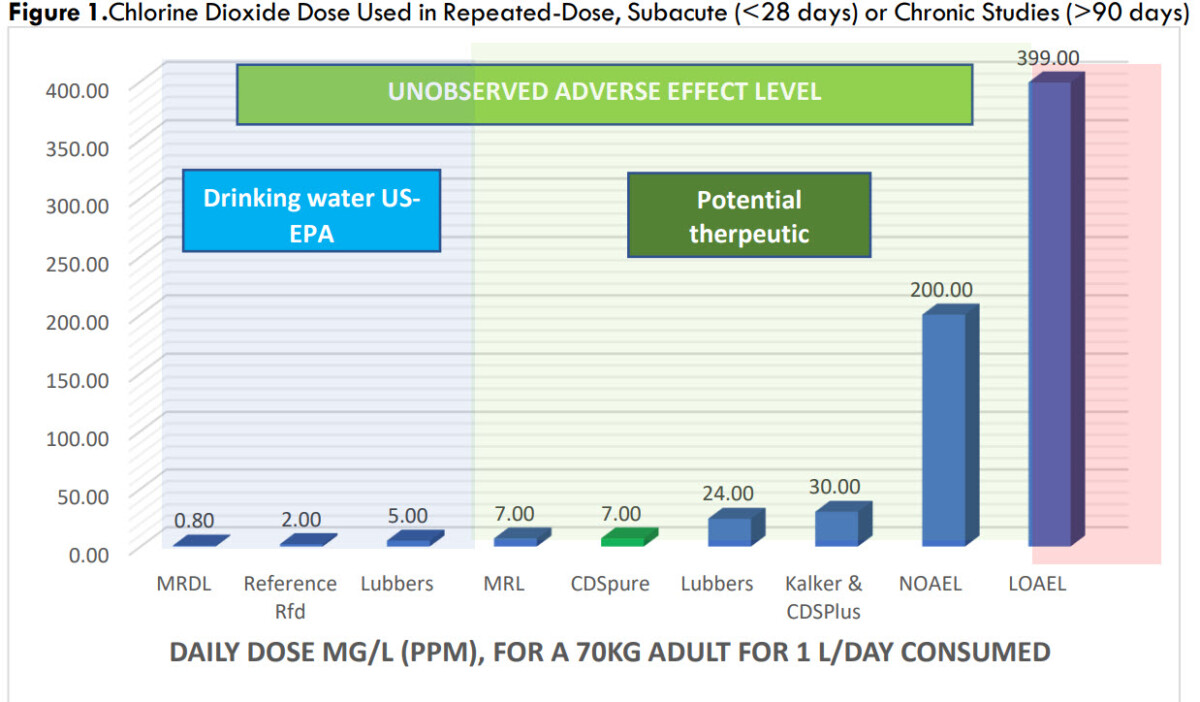
Figure 1. Chlorine dioxide dosage used in repeated-dose, subacute (<28 days) or chronic (>90 days) studies
Chlorine dioxide is added to drinking water to protect people from harmful bacteria and other microorganisms.
Most people are exposed to small amounts of chlorine dioxide and chlorite through treated drinking water and food, since it is used as a disinfectant in the food industry.
The article states that there is no evidence chlorine dioxide or chlorite affects human reproduction.
Reproductive studies in male animals do not consistently demonstrate changes in sperm-production markers, abnormal morphology or motility; however, reported effects occur at doses higher than those causing adverse developmental outcomes.
Similarly, changes in blood parameters occur at higher doses. The authors state that they found no information on human deaths following oral exposure to chlorine dioxide.
In a study by Scatina, 70 human volunteers drank chlorine dioxide solution at concentrations up to 24 ppm and reportedly experienced no adverse effects.
Methodology: Materials and methods
This study examined five antibiotic-resistant bacteria: E. coli, S. aureus, K. pneumoniae, S. pneumoniae, A. baumannii and P. aeruginosa.
All were obtained from a certified laboratory (ATTC, Germany) in frozen vials and grown on blood-agar plates.
A sample of each bacterium was collected from isolated colonies using a sterile loop in a class II safety cabinet and placed in sterile tubes containing 5 ml of tryptic soy broth (TSB).
These culture tubes were incubated at 37 °C in a Heraeus incubator. Once bacterial numbers reached suitable levels, the tubes were frozen and stored in liquid nitrogen at −176 °C until use.
Bacterial counting
To quantify bacteria in laboratories, colony-forming units are commonly counted, a simple method providing a general indication of cell viability.
A significant drawback is that results take several days and can vary between techniques depending on sample preparation and conditions.
In this study, bacterial counts were obtained with a QUANTOM Tx™ microbial cell counter from Logos Biosystems.
This automated image-based cell counter can identify and count individual bacteria within minutes.
The QUANTOM Tx automatically focuses, captures and analyzes multiple images of fluorescently stained cells to detect bacteria with high sensitivity and accuracy.
It uses an advanced cell-detection and declustering algorithm to identify individual bacterial cells even in tightly packed clusters.
In these experiments, the Viable Cell Staining Kit was used to distinguish living or viable cells from dead cells.
For QUANTOM sample preparation, 10 microliters (μl) of culture medium were collected using a previously calibrated DLAB electronic pipette and placed in a sterile 1.5 ml Eppendorf tube.
Two μl of Viable Cell Staining Dye were added, and the sample was incubated in a Heraeus incubator at 37 °C for 30 minutes.
Eight μl of buffer were then added to enhance the fluorescence signal.
Preparation of the chlorine dioxide solution
For the experiments, a 5 ml ampoule of CDS Pure® chlorine dioxide solution, manufactured by AQARIUS pro-life and listed as containing exactly 2,990 ppm chlorine dioxide (CAS 10049-04-41), was used.
This is described as a ready-to-use sterile chlorine dioxide solution in a sealed glass ampoule, highly purified by nanofiltration, pH-neutral and free from chlorine.
The chlorine dioxide solution (demineralized water and chlorine dioxide) is described as containing no residues, silver ions or nanoparticles. The source later gives the concentration as 2,900 ppm per 5 ml ampoule and says that this makes it straightforward to calculate the required milliliters.
Concentrations used in the experiments ranged from 1 to 7 ppm chlorine dioxide.
The experimental amounts for each concentration were: 1 ppm = 1.667 μl CDS Pure®, 2 ppm = 3.344 μl, 3 ppm = 5.016 μl, 4 ppm = 6.688 μl, 5 ppm = 8.336 μl, 6 ppm = 10.032 μl and 7 ppm = 11.704 μl. Exposure time was considered irrelevant because disinfection reportedly occurred immediately, within seconds.
Chlorine dioxide was added to these tubes at different concentrations.
The amount of chlorine dioxide solution used for the experiment ranged from 1.667 μl (1 ppm) to 11.704 μl (7 ppm) of the 5 ml CDS solution. It was transferred into the tubes using a DLAB electronic pipette and gently mixed for each bacterium.
A control tube containing the same culture medium was also prepared for every experimental tube.
Depending on the amount of chlorine dioxide placed in the experimental tube, the same amount of distilled water was added to the control tube to maintain a constant dilution factor.
Six μl samples were collected from the control and experimental tubes with an electronic pipette and transferred to M50 cell-counting slides.
The slides were placed in a QUANTOM centrifuge for eight minutes at 300 RCF (relative centrifugal force), then transferred to the QUANTOM microbial cell counter to obtain a baseline reading (control) and a reading from the experimental tube.
Optimal QUANTOM microbial cell counter settings for each bacterium were established according to the species’ shape and size to optimize counting.
Results
To evaluate the disinfection potential of chlorine dioxide against the five types of antibiotic-resistant bacteria, 5 ml CDSpure ampoules were used throughout the study because they contained a standardized concentration of 2,990 ppm.
Concentrations ranged from 1 to 7 ppm in increments of 1 ppm. Controls and experimental samples at each concentration were tested in triplicate and the averages calculated.
The resulting values were compared with the control sample that had received no CDSpure chlorine dioxide.
Overall, in all five bacterial experiments, disinfection exceeded 95% at the highest concentration of 7 ppm chlorine dioxide; some species were eliminated at lower concentrations between 4 and 7 ppm (t-test, p<0.01).
Let us examine each bacterial species separately in the following tables and figures.
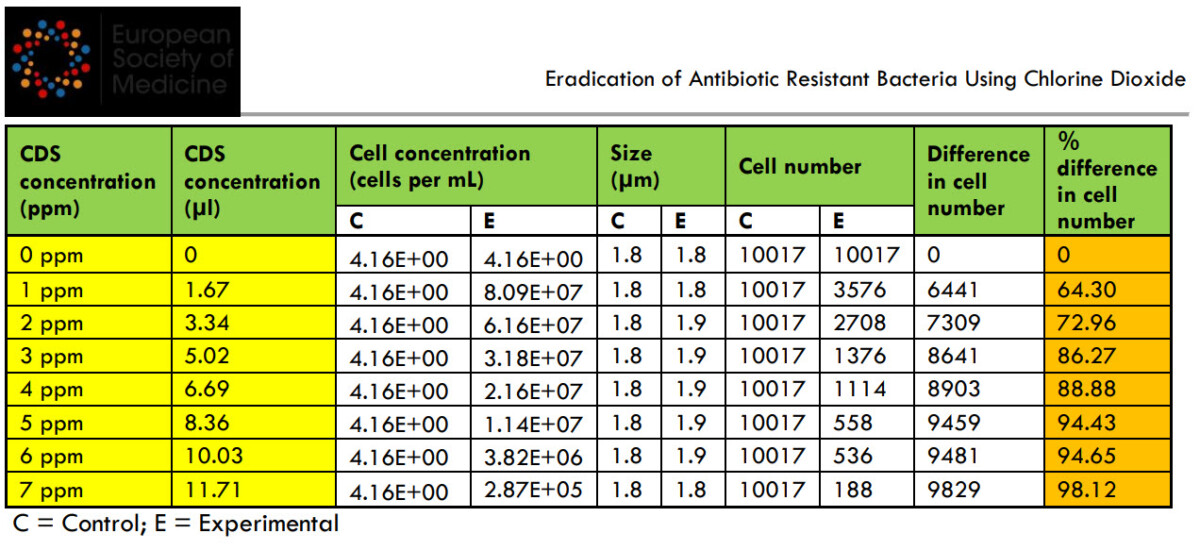
Disinfection of Acinetobacter baumannii: With A. baumannii, 99% disinfection was reported at chlorine dioxide concentrations of 5, 6 and 7 ppm (t-test, p<0.01; Table 1, Figure 2).
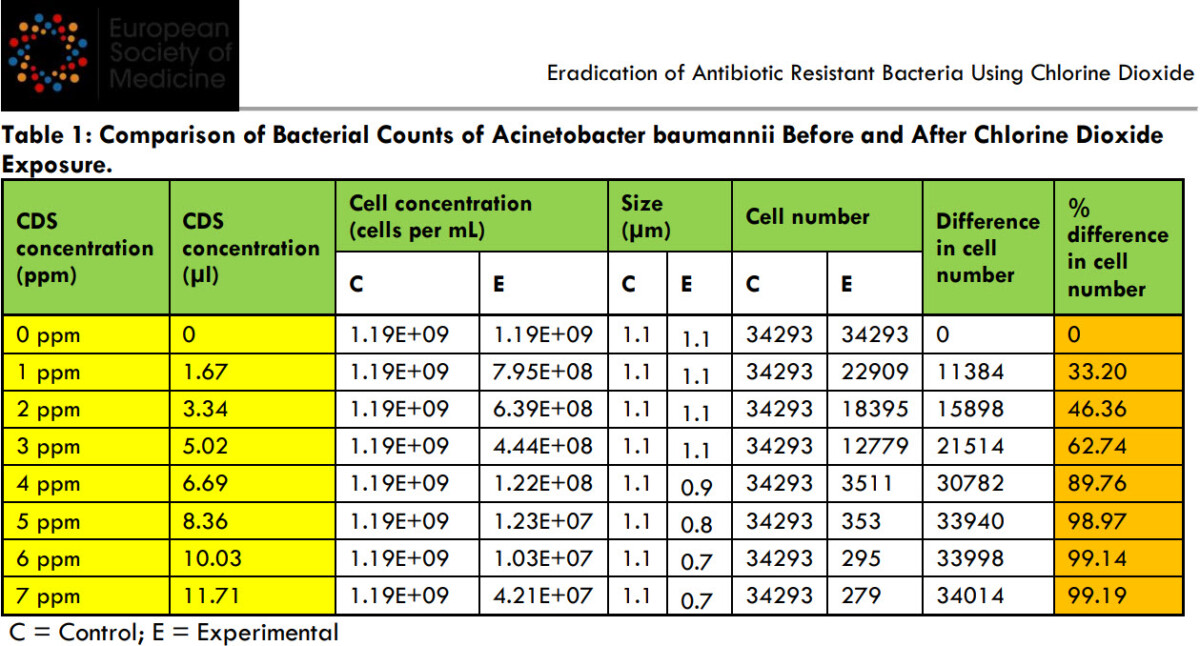
Comparison of Acinetobacter baumannii bacterial counts before and after chlorine dioxide exposure
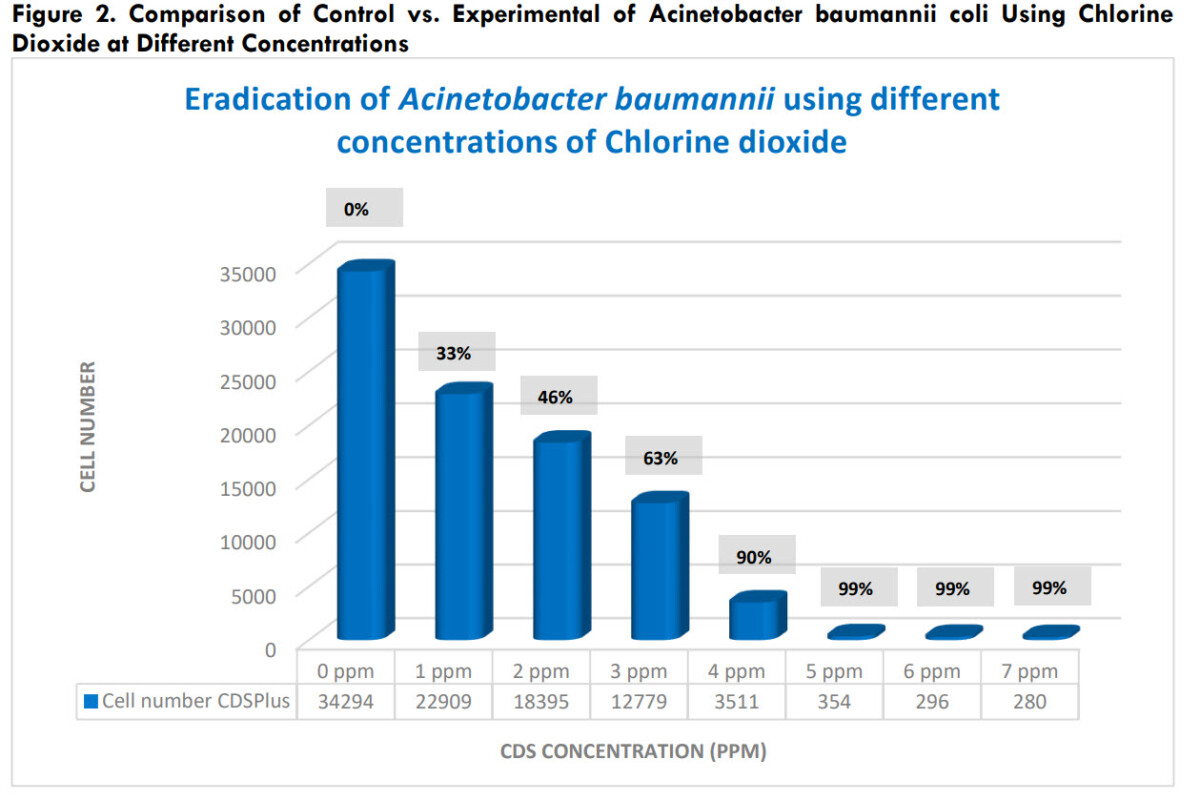
Disinfection of Escherichia coli
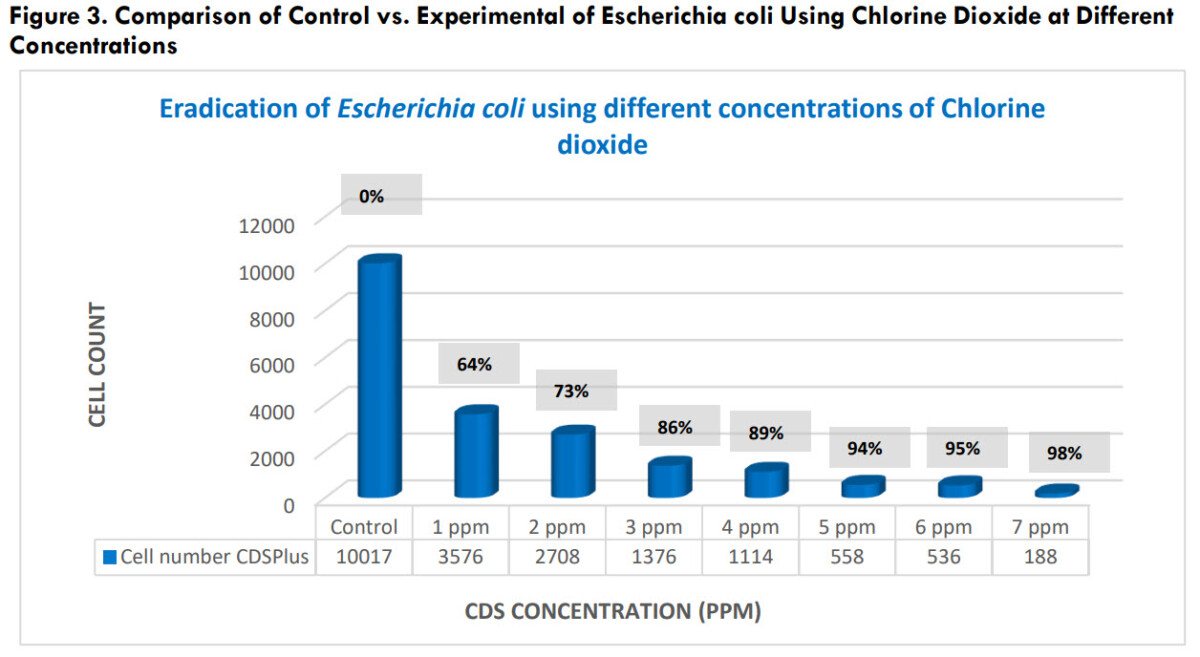
With E. coli, disinfection exceeded 98% at a chlorine dioxide concentration of 7 ppm (t-test, p<0.01; Table 2, Figure 3).
Disinfection of Klebsiella pneumoniae
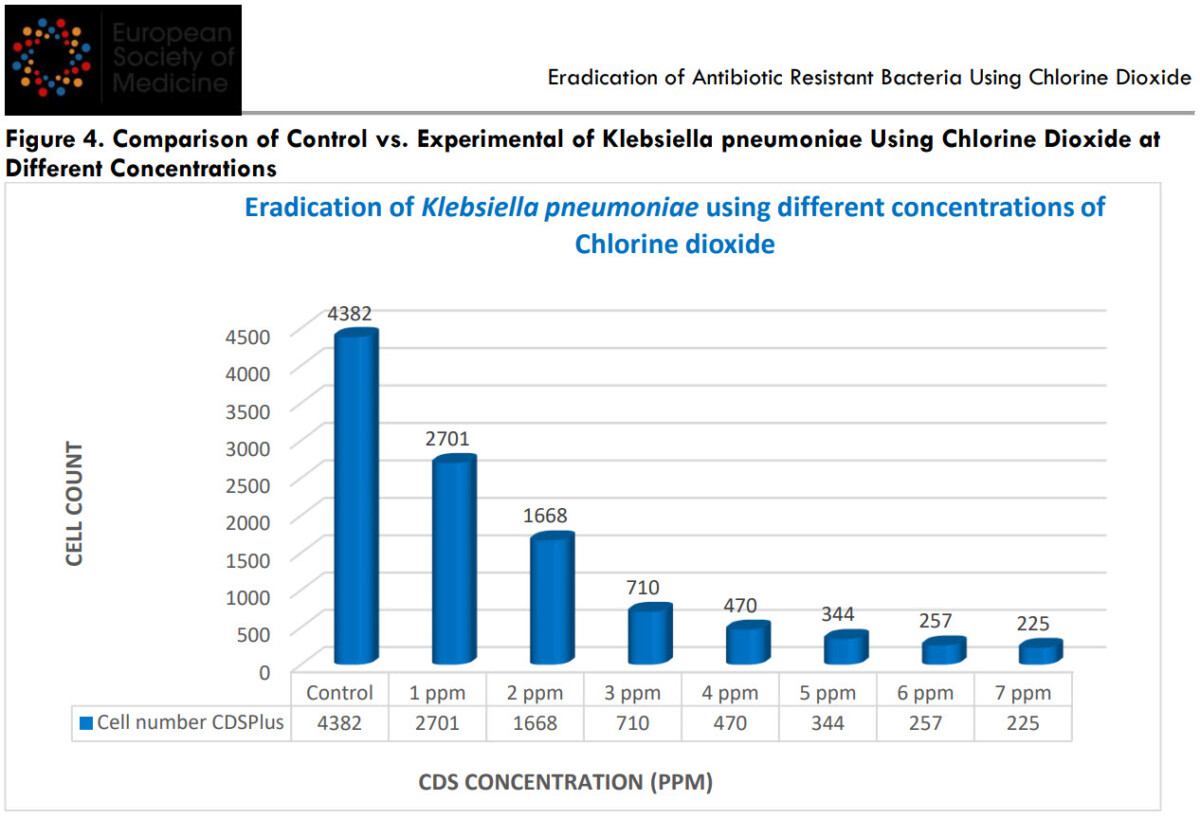
With K. pneumoniae, disinfection exceeded 94% at concentrations of 6 and 7 ppm chlorine dioxide (t-test, p<0.01; Table 3, Figure 4).
Table 3: Comparison of Klebsiella pneumoniae bacterial counts before and after chlorine dioxide
Exposure
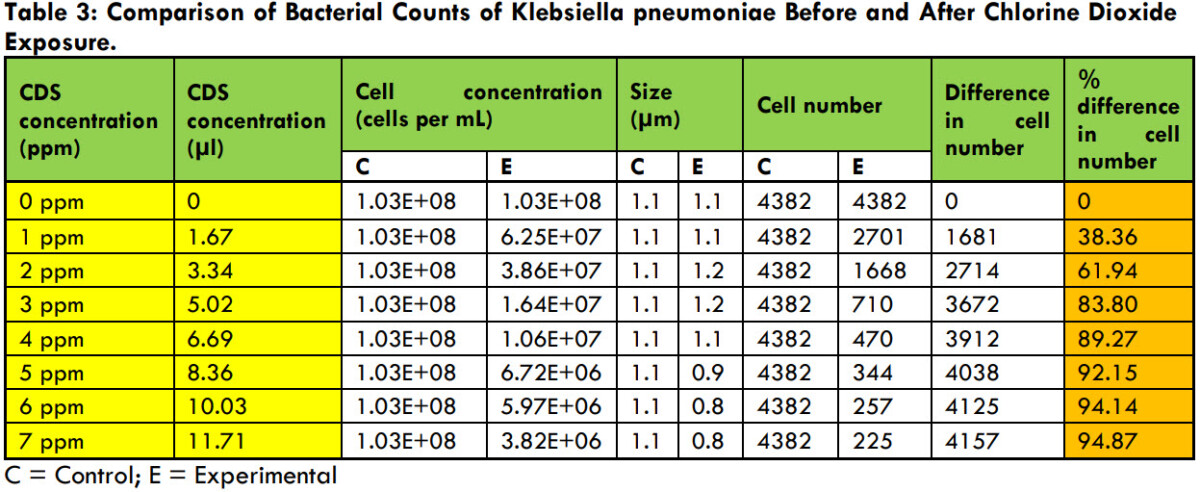
Comparison of Klebsiella pneumoniae bacterial counts before and after chlorine dioxide
Comparison of control and experimental Klebsiella pneumoniae using chlorine dioxide at different concentrations
Disinfection of methicillin-resistant Staphylococcus aureus (MRSA)
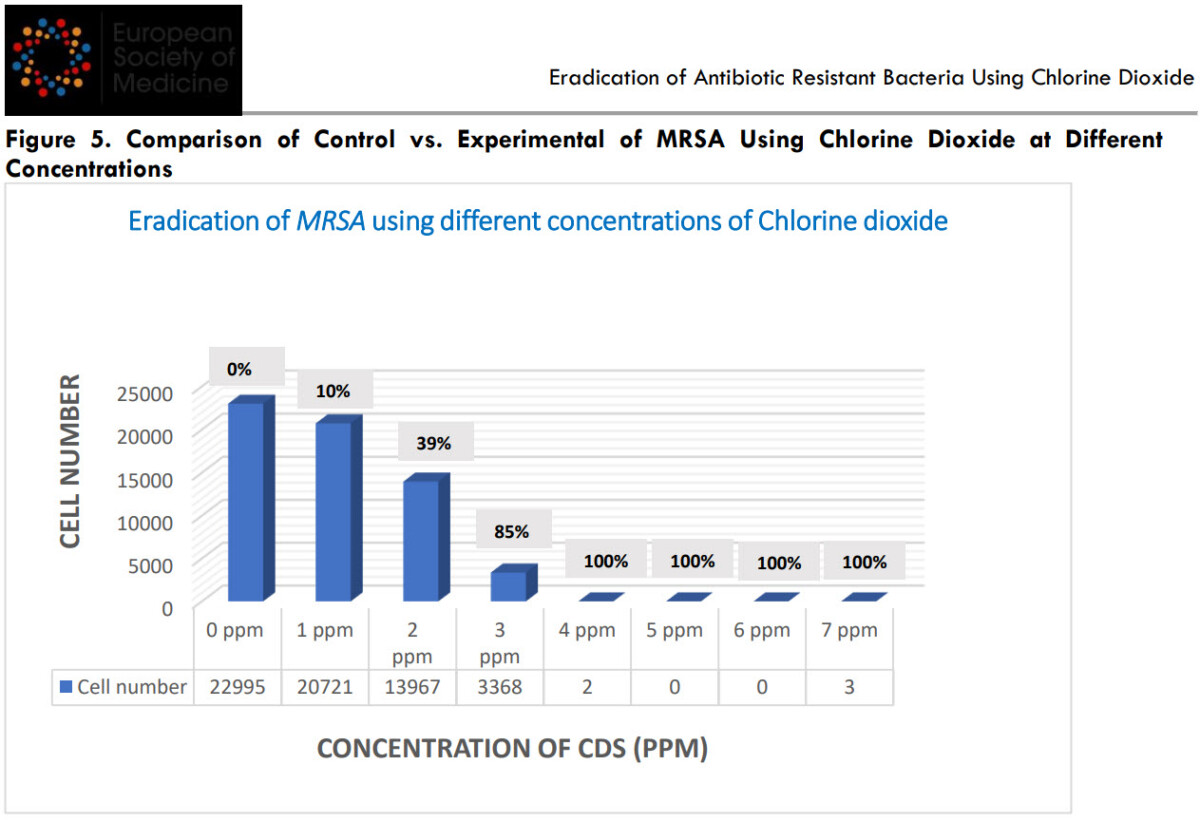
With MRSA, disinfection exceeded 99% at concentrations of 4–7 ppm chlorine dioxide (t-test, p<0.01; Table 4, Figure 5).
Table 4: Comparison of MRSA bacterial counts before and after chlorine dioxide exposure.
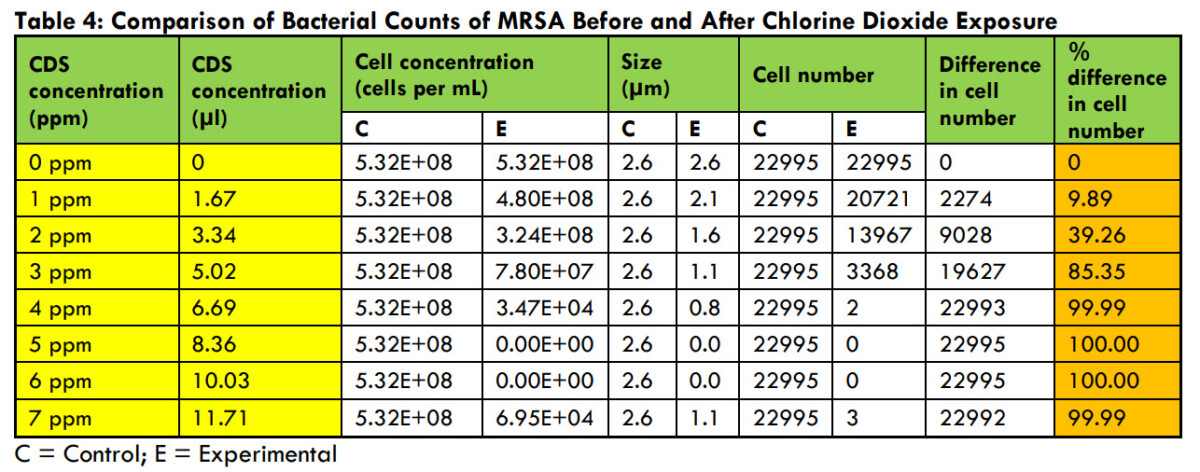
Figure 5. Comparison of control and experimental MRSA using chlorine dioxide at different concentrations.
Disinfection of Pseudomonas aeruginosa: For P. aeruginosa, disinfection exceeded 95% at a chlorine dioxide concentration of 7 ppm (t-test, p<0.01; Table 5, Figure 6).
This research indicates that chlorine dioxide solution is effective in vitro at eliminating the antibiotic-resistant bacterial species examined.
Chlorine dioxide concentrations needed to achieve disinfection of at least 95% for the five antibiotic-resistant bacteria ranged from 4 to 7 ppm, which the authors describe as within potentially safe limits (see Figure 1).
Figure 6. Comparison of control and experimental Pseudomonas aeruginosa using chlorine dioxide at different concentrations.
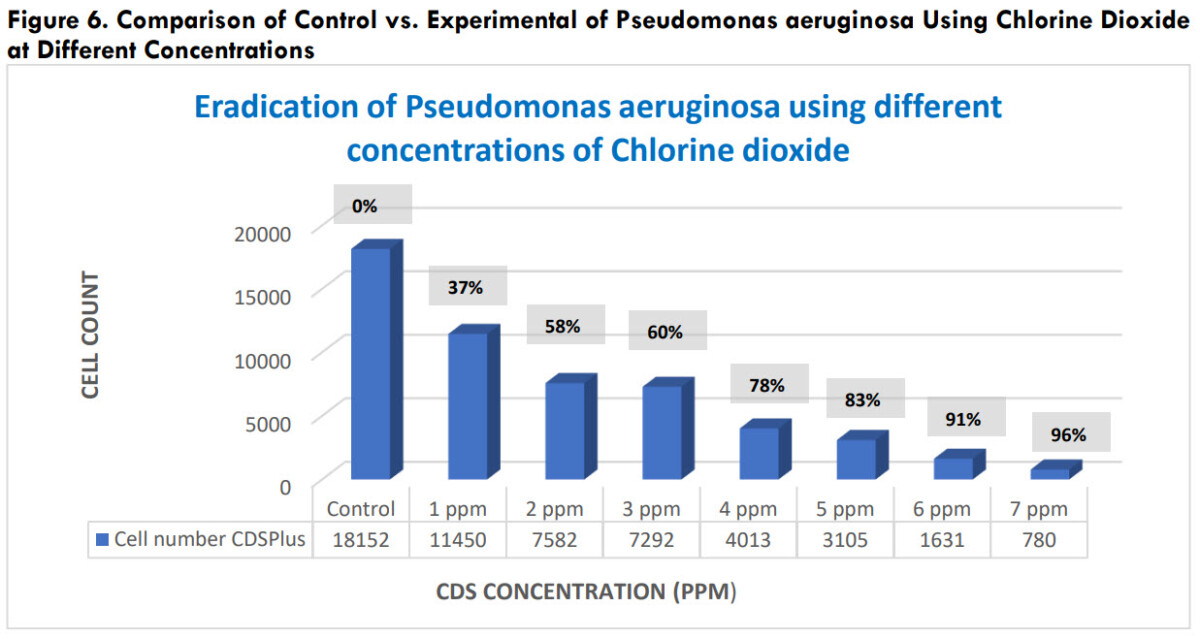
Figure 6. Comparison of control and experimental Pseudomonas aeruginosa using chlorine dioxide at different concentrations.
Table 5: Comparison of Pseudomonas aeruginosa bacterial counts before and after chlorine dioxide
Exposure.
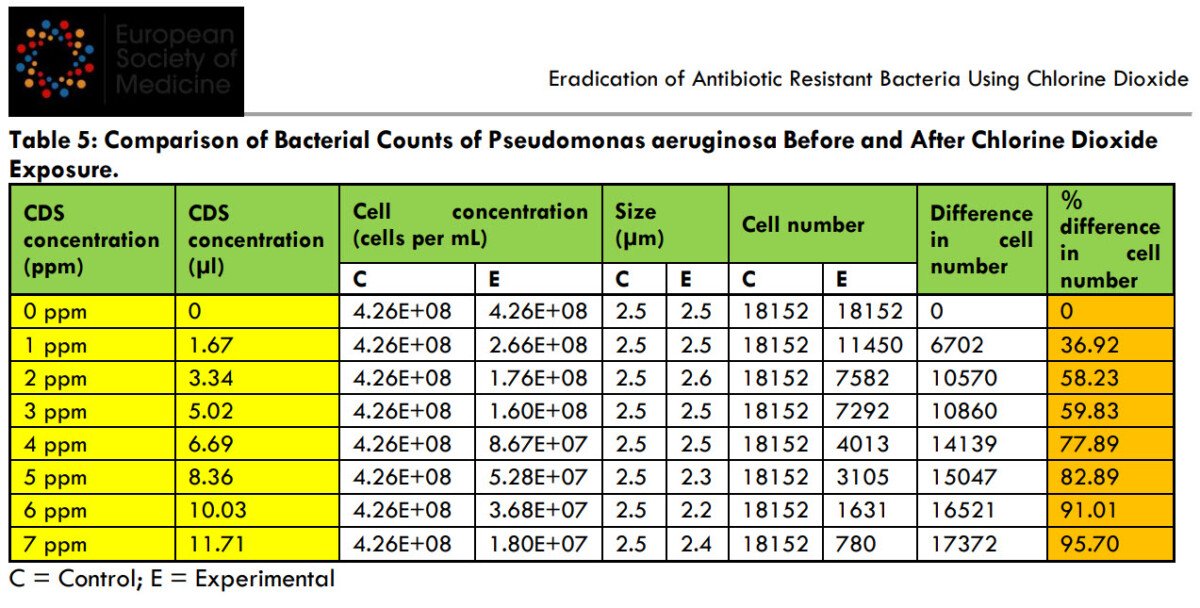
Exposure.
Discussion
The rise of antibiotic-resistant bacteria poses a major threat to global public health. These organisms have developed resistance to conventional antibiotics, making infections increasingly difficult to treat and contributing to higher mortality and healthcare costs.
Annual deaths from antibiotic-resistant diseases are projected to exceed 10 million by 2050, surpassing the number of cancer deaths.
This is a serious threat to global health: infections once treated rapidly can now lead to prolonged illness, considerable suffering and pressure on healthcare systems.
The impact of research into alternatives for eliminating antibiotic-resistant bacteria should not be underestimated. According to the article, such research could save lives worldwide in the following ways:
1. Improving patient outcomes: Alternative strategies may successfully treat infections once considered untreatable.
By targeting antibiotic-resistant bacteria, these approaches could improve patient outcomes, reduce illness and death, and restore hope for people suffering from resistant infections.
2. Reducing the healthcare burden: The growing burden of antibiotic-resistant infections strains healthcare systems worldwide.
Finding alternatives to combat resistance could ease the pressure on healthcare resources, improve efficiency, shorten hospital stays and reduce healthcare expenditure.
3. Preventing epidemics: If left unchecked, resistant bacteria can cause widespread outbreaks.
Research into alternatives offers a chance to prevent the emergence and spread of resistant strains, protect public health and avert large-scale epidemics.
4. Diversifying treatment options.
New and natural treatments are described as offering alternative approaches to combating antibiotic resistance.
They would broaden the range of therapeutic options available to healthcare providers, providing multiple tools with which to address resistant infections.
Such diversity would increase the likelihood of successful treatment and help overcome the limitations of conventional antibiotics.
5. Overcoming resistance mechanisms: Antibiotic-resistant bacteria have evolved sophisticated ways to evade the effects of conventional antibiotics.
New and natural treatments may target bacteria through different pathways, bypassing or overcoming existing resistance mechanisms and reducing the likelihood of treatment failure.
6. Reducing side effects and toxicity: Many conventional antibiotics have side effects and can be toxic, particularly when taken for extended periods.
The article suggests that natural treatments such as chlorine dioxide might have lower toxicity and fewer adverse effects, which it argues would be particularly beneficial for vulnerable groups including children, pregnant women and older people.
7. Preserving the gut microbiome: Conventional antibiotics can disrupt the balance of beneficial intestinal bacteria, causing dysbiosis and potentially long-term health consequences.
The article suggests that newer natural treatments could selectively eliminate harmful bacteria while preserving the diversity and function of the intestinal microbiome.
Preserving this balance matters because a healthy gut microbiome plays an important role in immune function, digestion and overall well-being.
8. Sustainable, environmentally friendly solutions: The production and use of conventional antibiotics can have harmful environmental effects, including the emergence of antibiotic-resistant strains in the environment.
Natural treatments often come from renewable sources such as plants or microbe-derived compounds that can be produced sustainably. The article suggests that they may also break down more easily and reduce long-term environmental damage.
9. Potential for combination therapies: Natural treatments may be combined with conventional antibiotics or other alternative therapies to create synergistic effects and improve outcomes.
This approach would allow individualized, tailored treatment regimens that optimize the potential advantages of each therapy.
Combination therapies may be more effective against resistant bacteria, shorten treatment and prevent further resistance.
10. Accessible, affordable treatment options: In many parts of the world, conventional antibiotics are difficult to obtain or prohibitively expensive.
Natural treatments made from locally available resources may offer more accessible and less costly options for resistant infections.
This could have a significant effect on global health, particularly in resource-limited settings where antibiotic resistance imposes a high burden.
In the search for effective alternatives, the article presents chlorine dioxide as a promising option for eliminating antibiotic-resistant bacteria.
It describes the substance as disrupting bacterial cellular structures, preventing bacteria from reproducing and causing further harm.
Advantages of chlorine dioxide
Chlorine dioxide is presented as a promising agent against resistant pathogens.
The article describes its broad-spectrum activity, residual effectiveness, supposedly lower propensity to select for resistance and environmental safety as valuable features in combating antibiotic-resistant bacteria.
It argues that incorporating chlorine dioxide into comprehensive infection-control strategies could substantially reduce deaths from these infections, protect public health and address the growing problem of antibiotic resistance.
The article outlines several claimed advantages of chlorine dioxide against antibiotic-resistant microorganisms. Broad-spectrum activity: chlorine dioxide has reportedly shown activity against many bacteria, including MRSA and other resistant strains.
Its ability to target bacterial cell walls and disrupt essential metabolic processes is presented as making it an effective antimicrobial agent.
Residual effectiveness: Unlike traditional disinfectants, chlorine dioxide reportedly leaves a residual effect that protects surfaces even after initial application.
This residual action is especially important in healthcare settings, where surfaces can quickly become contaminated, helping provide continuing protection against bacterial colonization and transmission.
Reduced likelihood of resistance development:
The article claims that chlorine dioxide’s mechanism of action reduces the likelihood of bacteria developing resistance.
Unlike conventional antibiotics that target specific bacterial components, chlorine dioxide is said to attack several cellular structures at once, making resistance mechanisms more difficult to develop.
Biofilm eradication: Research studies are described as showing that chlorine dioxide penetrates and removes biofilms.
Biofilms are estimated to be 1,000 times more resistant to antibiotics than free-floating cells.
Environmental safety:
Chlorine dioxide is presented as having a favorable environmental profile. The article states that it breaks down into harmless by-products without leaving toxic residues.
According to the article, this means that its use for disinfection does not contribute to long-term environmental damage.
Potential effects:
The article attaches great importance to chlorine dioxide’s claimed ability to eliminate antibiotic-resistant bacteria.
It argues that an alternative treatment option might help address antibiotic resistance, reduce mortality and relieve pressure on healthcare systems.
Its reported action against MRSA and other resistant strains is presented as potentially improving patient outcomes, shortening hospitalization and lowering healthcare costs.
Cost-effectiveness:
Chlorine dioxide solution is inexpensive, and the article suggests that it could substantially reduce a country’s healthcare spending over time.
Conclusions
The present research investigated the in-vitro effectiveness of chlorine dioxide against several particularly important antibiotic-resistant bacterial pathogens associated with large numbers of deaths worldwide.
The authors report that the optimal concentration for almost complete in-vitro disinfection was 7 ppm (p<0.01).
The source describes this as a safe dose for ingestion, comparing it with a concentration used for water treatment.
It suggests that what was observed in vitro will probably also occur in the human body.
It states that, like blood, chlorine dioxide releases oxygen when it encounters acidity, whether from lactic acid or from a microorganism.
The article claims that, as chlorine dioxide breaks down, it releases oxygen into the blood like red blood cells, following the same principle (called the Bohr effect), supposedly because it acts selectively on acidic environments.
Chlorine dioxide is described as a size-selective antimicrobial agent that can rapidly kill micrometer-sized organisms but supposedly cannot significantly damage much larger organisms such as animals or humans because it cannot penetrate deeply into living tissue.
There has been considerable controversy surrounding the use of chlorine dioxide.
However, the article argues that, as with any medicine or supplement, the consequences of exposure to a substance depend on the route of administration (such as inhalation, topical use or ingestion), the form of the substance (gas or aqueous solution), concentration, duration of exposure, personal characteristics and habits, and whether other chemicals or impurities are present.
It emphasizes that numerous toxicology studies involving humans and animals have been performed over the years and says these demonstrate safety and effectiveness in applications intended to keep human exposure within safe limits.
According to the article, chlorine dioxide has been shown to be safe when used appropriately in the low doses it presents as necessary to neutralize microorganisms.
The article describes positive results from recent chlorine dioxide clinical trials for COVID-19 conducted by Insignares–Carrione in 2021, in which it says patients received very pure CDS chlorine dioxide (2,990 ppm) intravenously.
It also refers to governmental authorization of chlorine dioxide solutions for COVID-19 prevention and treatment in Bolivia through legislation adopted in 2020.
It states that an ethics committee was legally established and approved by Bolivia’s Ministry of Health, which investigates applications of chlorine dioxide through clinical, scientific and research-ethics committees.
The source additionally asserts that chlorine dioxide has been used widely in clinical applications against Epstein–Barr virus (EBV), cytomegalovirus (CMV), hepatitis A and B viruses, HIV (the AIDS virus) and others.
Further research has investigated the potential clinical use of chlorine dioxide against various spores, bacteria and viruses over the years.
There are hundreds more volunteer testimonials about chlorine dioxide collected over the years by Jim Humble for various purported applications of the substance.
Clinical trials are needed to establish which approaches would work best in clinical practice.
The source suggests that clinicians using intravenous infusions may use 5 ml CDSpure ampoules (2,990 ppm) directly or administer the substance orally after dilution to the stated levels.
Conflicts of interest: None
Funding statement: None
Original version of the research on Scribd.
Eradication of Antibiotic Resistant Bacteria Using Chlorine Dioxide.
Eradication of Antibiotic Resistant Bacteria Using Chlorine Dioxide by sfagi on Scribd
(function() { var scribd = document.createElement(“script”); scribd.type = “text/javascript”; scribd.async = true; scribd.src = “https://www.scribd.com/javascripts/embed_code/inject.js”; var s = document.getElementsByTagName(“script”)[0]; s.parentNode.insertBefore(scribd, s); })();
Published: 2023
Citation: Georgiou G, Kotzé A, et al., 2023. Eradication of Antibiotic-Resistant E. coli, S. aureus, K. pneumoniae, S. pneumoniae, A. baumannii, and P. aeruginosa with Chlorine Dioxide In Vitro, Medical Research Archives, [online] 11(6).
https://doi.org/10.18103/mra.v11i7.2.4218
Copyright: © 2023 European Society of Medicine. This is an open-access article distributed under the terms of the Creative Commons Attribution License, which permits unrestricted use,
distribution and reproduction in any medium provided the original author and source are acknowledged.
DOI
https://doi.org/10.18103/mra.v11i7.2.4218
ISSN: 2375-1924
RESEARCH ARTICLE
Eradication of antibiotic-resistant E. coli, S. aureus, K. pneumoniae, S. pneumoniae, A. baumannii and P. aeruginosa with chlorine dioxide in vitro
George Georgiou – Principal investigator – admin@docgeorge.com
Agnieszka Kotzé – Researcher – aggie.kotze@gmail.com
Published: June 30, 2023
Citation: Georgiou G, Kotzé A, et al., 2023. Eradication of Antibiotic-Resistant E. coli, S. aureus, K. pneumoniae, S. pneumoniae, A. baumannii, and P. aeruginosa with Chlorine Dioxide In Vitro, Medical Research Archives, [online] 11(6).
https://doi.org/10.18103/mra.v11i7.2.4218
Copyright: © 2023 European Society of Medicine. This is an open-access article distributed under the terms of the Creative Commons Attribution License, which permits unrestricted use,
distribution, and reproduction in any medium, provided the original author and source are credited.
DOI
https://doi.org/10.18103/mra.v11i7.2.4218
ISSN: 2375-1924
RESEARCH ARTICLE
Eradication of Antibiotic-Resistant E. coli, S. aureus, K. pneumoniae, S. pneumoniae, A. baumannii, and P. aeruginosa with Chlorine Dioxide In Vitro
George Georgiou – Principal Investigator – admin@docgeorge.com
Agnieszka Kotzé – Researcher – aggie.kotze@gmail.com
